De mens op z’n minst rationeel (sociologie)

Ik zat ’s avonds op de bank toen er een spotje van het WWF voorbij kwam. Om te zeggen dat ik maar half aan het kijken was zou al sterk gesteld zijn, maar toch wist het filmpje mijn aandacht te trekken. Het was -hoe kan het dan ook anders van het WWF- gericht op klimaatverandering en de bewustwording daarvan. Het indrukwekkende camerawerk, de muziek en de overtuigende stem weerhielden me van het verleidende multitasken en dwongen me tot het wegleggen van mijn telefoon. Ze eindigden met de onheilspellende vraag: “Are you for the world, or against it?”

Ik dacht terug aan de sociologische blik van vandaag. Iris Duivenman had ons het begrip rationaliteit uitgelegd, dat het betekent dat we ervanuit gaan dat ieder mens in staat is om zelf een weloverwogen keuze te maken. Toch staat dat beeld, hoe realistisch en waarheidsgetrouw het ook klinkt, haaks op hoe wij ons gedragen. We verwachten een soort van nudgepaternalisme van de overheid die ons moet weerhouden van onze eigen drang naar het asfalteren van onze longen, we hebben een leerplicht nodig om ons te dwingen een toekomst op te bouwen en nu hebben we blijkbaar ook reclame nodig om in te zien dat we, als we deze planeet vermoorden, ook onszelf in de problemen werken. De onwetendheid rond dit probleem is gigantisch en de desinteresse ervoor is nog groter.

Ook denk ik aan Sartre, de man aan wie ik vreemd genoeg soort van te danken heb dat ik hier bij Nimbin zit. Ik denk aan zijn existentialistische insteek waarbij mensen te kiezen hebben wie zij willen zijn. Maar als je volledige keuzevrijheid hebt en je bovendien ook op een rationele manier afwegingen kan maken over welke keuzes voor jou de beste gevolgen hebben, waarom is er dan in hemelsnaam een versterkt broeikaseffect aan de gang? Je hebt de mogelijkheid om te kiezen wie je wilt zijn en je besluit om het soort persoon te zijn die zichzelf en zijn omgeving doodt. Misschien klinkt dat als een overdramatische conclusie, maar ik vrees dat dat wel exact is wat er nu speelt. ‘Ik kan niet leven zonder vlees,’ hoor ik mensen wel eens zeggen, dus dan maar niet meer leven. Dan maar geen planeet meer.

(Mocht je het spotje willen kijken: https://youtu.be/pBmLPcvTUHw)
Week van de luiheid – interview Sion

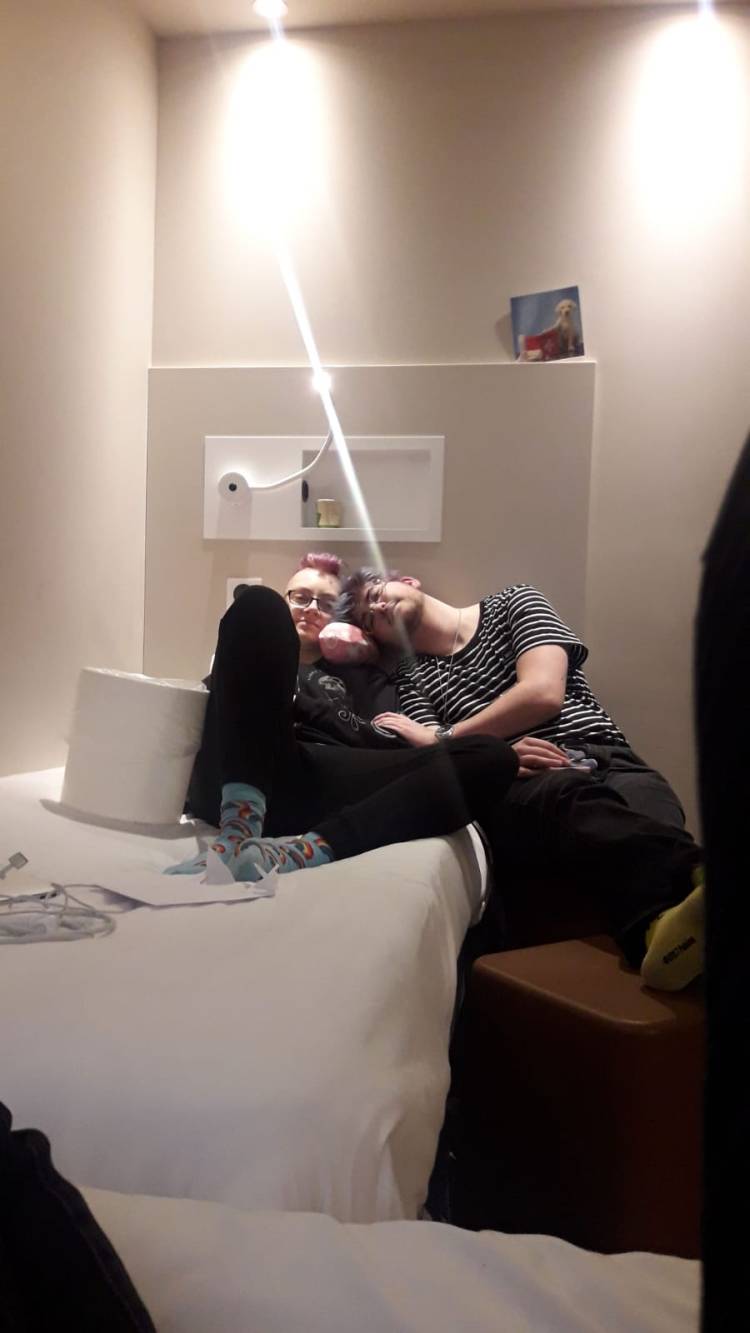
Ik bel aan en na een tijdje hoor ik de deur ontgrendelen, maar hij opent niet. “Je moet duwen!” hoor ik hem roepen. Ik duw en ik zie Sion Vissers lachend staan. “Nog niet genoeg kracht om de deur zelf open te trekken”, lacht hij verontschuldigend. Sion is een transman en heeft ongeveer twee weken geleden zijn borstoperatie gehad. Hij mag en kan dus nog niet zoveel doen met zijn armen, anders loopt hij risico dat zijn littekens breder worden. Waar hij normaal drie keer in de week sport, ieder weekend uitgaat en maandelijks bij concerten of festivals staat te headbangen op heavy metal, moet hij nu op zijn tenen staan om zelf bij het lichtknopje te kunnen als hij naar de wc strompelt. Verplicht tot luiheid.
“Ik kan in ieder geval al zelf naar de wc. Ik kan ook mezelf alweer redelijk aankleden, al duurt het even. Verder lukt nog vrij weinig me. Ik woon nu weer tijdelijk bij mijn vader, zodat hij me kan helpen. Hij doet de was voor me, helpt me met het verwisselen van mijn verband en nog veel meer. Mijn vriend Alex komt ook vaak langs, die helpt dan met koken en zorgt voor drinken als er visite komt. Wat ik zelf doe? Minimaal dertien netflixseries kijken per week, veel meer eigenlijk niet. Vreselijk, ik verveel me dood. Ik ben helemaal niet lui ingesteld, maar nu kan ik niet anders. Het herstel duurt zo’n zes weken, maar ik heb een complicatie gehad, dus dat kan best langer worden. Nog even lui blijven dus, vrees ik..”

Poem: Emptiness or lack thereof

“I’m a writer”,
I used to say.
I mean, I still say that,
But I can’t anymore without feeling like I’m lying
So what changed?
And I know, that I did,
I used to want to stay as long as I could with people I never should’ve been with in the first place, not because I thought it wasn’t that bad, but because they gave me something to write about.
Poetry, for me, started out as a coping mechanism
When I was laying in bed at night, not quite asleep but also not really awake, all those moments where my poor heart was trying so hard to make sure I keep living and my head was trying even harder to make sure I wouldn’t, the only way to silence those screaming thoughts was to simply write them down
And they wrote themselves down

So, maybe, I should be thankful
That I no longer have anything to write about
That the events in my poems happened years ago, if at all
That I can write poetry at ten AM while I’m dressed and I’ve had breakfast, and not just at four AM when no sleeping pill is strong enough to hold me down

Maybe that’s the kind of poetry I should’ve been writing all along

Koffie met Wiets/emotional rant

February the 14th

We were talking about the discussion of ‘fulfilled lives’ and euthanasia, when I noticed that Megan didn’t look so well. I whispered to ask her if she was okay and she mouthed back that she was, but seconds later, she just bursted into tears. She (very bravely) told us the story of how she might not have been here if she had an ‘off-switch’ like the column madd euthanasia seem. I think it’s safe to say that hit all of us and I for sure had to bite down too. I know that for me, it’s not a question of ‘maybe-maybe not’, if I had an off-switch like that as a kid, there wouldn’t be the slightest chance of me ever making it to 19 years old.
That came, even though it’s something that I’ve always known, as the strangest conclusion to me. Right now, I’m so unbelievably happy. I changed my name, I started testosterone, I cut out all of the toxic relationships I had with people and made so many friends to replace them, all the stress surrounding my education is gone… I can finally just relax and start working on the kind of journalist -but more important the kind of PERSON- I want to be.
For someone who’s suffered with mental health their entire life, that is just surreal. I don’t even have words for it. I’m more happy than I’ve been in years, more confident than ever, I finally feel like me. When I come home after a long day, I only want to sleep for half an hour instead of forever. I just feel content, and at piece, and curious of all the things I’ve yet to discover, and I wonder if this is how ‘normal people’ have felt all along.
I knew from the second I first heard about it from Wietske, that evening at dinner at the Day of Philosophy, that Nimbin would be lifechanging, but I never thought it would happen so fast. It’s like something in me just clicked, and I’m praying to all of the gods that I’ll probably never believe in that whatever that is, it will never click back.

“Before I met you, I wanted to be dead all the time. I still do, because of the, you know, mental illness, but now that you’re here I don’t want to want to die anymore.”

“Me, But Happy” – from Our Numbered Days by Neil Hilborn

On the kinds of neighborhoods and our schooling system

February the 11th, Den Bosch (de Grote Wielen)

The master’s tools will never destroy the master’s house

A phrase commonly heard in the debate on slavery,
about how you cannot use the means that the current system gives you to rebel against the current system, you cannot conform to a system that you’re trying to change.

‘The city’

February the 10th, FHJ

“The city is made out of stone and stories”

Jan-Hendrik Bakker

“The past is too small to live in”

Rem Koolhaas

In de Stationsstraat in Den Bosch staat in een wijk vol 17e-eeuwse huizen één heel modern grijs gebouw. Iedereen in Den Bosch vindt het een doorn in het oog en vindt dat het vreselijk afsteekt tegen de oude roodachtige panden ernaast. Jos vertelde dat hij er ooit over sprak met een Brabantse architect, die zei: “Het gaat helemaal niet om mooi of lelijk. Het gaat erom dat er een tijd was waarin mensen dachten: ‘Ja, dit moet het zijn, dit is perfect’. Wie ben jij om te beslissen dat zij het mis hadden? Destijds wilde iedereen daar wonen. Als je dit nu afbreekt en herbouwt in de stijl van de rest van de straat, zal niemand over 30 jaar ooit nog weten dat het er stond, maar zal ook niemand nog iets weten van de geschiedenis van dat stuk grond. Dat stuk straat is verwoest in de oorlog en het gebouw dat daar toen is bijgebouwd is ontworpen in de stijl die na de oorlog zo populair was. Wie ben jij om dat stukje geschiedenis weg te halen, puur omdat jij het niet mooi vindt?”

Anthropology and the discussion thereof

February 6th, FHJ

Elisabeth told us about a foreign friend of hers who always spends at least five to ten minutes to really ask her how she’s doing. She was annoyed by that at first, but later realised that that is just his culture. Here in the Netherlands, asking someone how they’re doing is more of a formality or a greeting, rather than a genuine question. But why ask someone how they’re feeling, if you don’t actually want to know? Don’t we all just want someone who checks up on you every once in a while and who actually really cares how you’re doing? Maybe we should all be a little more like her friend.

Stedelijk Museum

February the 4th

“I think that the genes for being an artist and being mentally ill aren’t just related, they’re the same gene” -Neil Hilborn, Joey – Our numbered days

This quote (from a poet I absolutely adore) is the first thing that came to my mind when I was looking at the work called Orgy of Narcissus by Carlos Amorales. Walking in the room, seeing the images of bodies that kept getting more and more messed up as you kept walking further along, that combined with the horrible messy music from next-door gave me the feeling of looking inside Amorales’ head while he was having a panic attack. A line that stood out to me in his description of his work: “On closer inspection, clearly nobody is really enjoying themselves.”

Ontwerp een vergelijkbare site met WordPress.com
Aan de slag